The case for monorepos in modern web development
Why monorepos improve collaboration, code sharing, and maintainability — and how to handle the real concerns about build times and tooling.
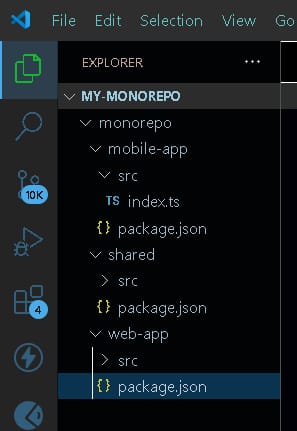
A monorepo keeps multiple related projects — frontend, backend, shared libraries, infra — in a single repository. Critics worry about scale, but with the right tooling a monorepo can outperform a pile of micro-repos on collaboration and consistency. This article makes the case and addresses the common objections.
1. Benefits that actually matter
- **Code sharing** — one `packages/ui` or `packages/utils` used everywhere, no duplicated logic.
- **Atomic changes** — fix a bug in the API and update the client in a single commit.
- **Refactoring confidence** — rename a function and see every caller at once.
- **Consistent tooling** — one lint config, one CI, one dependency version.
txt
my-monorepo/
  apps/
    web/        # Next.js frontend
    api/        # backend service
  packages/
    ui/         # shared components
    config/     # shared eslint/tsconfig
2. Tooling that makes it work
- **Turborepo** / **Nx** — task orchestration with caching and affected-only builds.
- **pnpm workspaces** — fast, disk-efficient dependency management.
- **Changesets** — version and publish shared packages cleanly.
json
// pnpm-workspace.yaml
packages:
  - "apps/*"
  - "packages/*"
3. Addressing the concerns
| Concern | Mitigation |
|---|---|
| Slow builds | Cache + run only affected projects |
| Tooling complexity | Use Turborepo/Nx pipelines |
| Huge repo size | Use sparse checkout / VFS |
| Tight coupling | Enforce package boundaries |
4. When a monorepo is the wrong call
- Fully independent teams with separate release cadences and no shared code.
- Regulatory walls that require separating codebases.
- Tiny projects where the overhead isn't worth it.
5. A practical starting point
If you're considering it, start small: put your frontend and its shared UI in one repo with pnpm workspaces, add Turborepo for caching, and grow from there. You get the sharing and atomic-change benefits immediately without a big migration.
Takeaway
Monorepos aren't magic, but for teams shipping related apps they remove a surprising amount of friction: less duplication, safer refactors, and one source of truth. The old "monorepos don't scale" fear is mostly solved by modern tooling.