types of API
An overview of different types of APIs and their use cases.
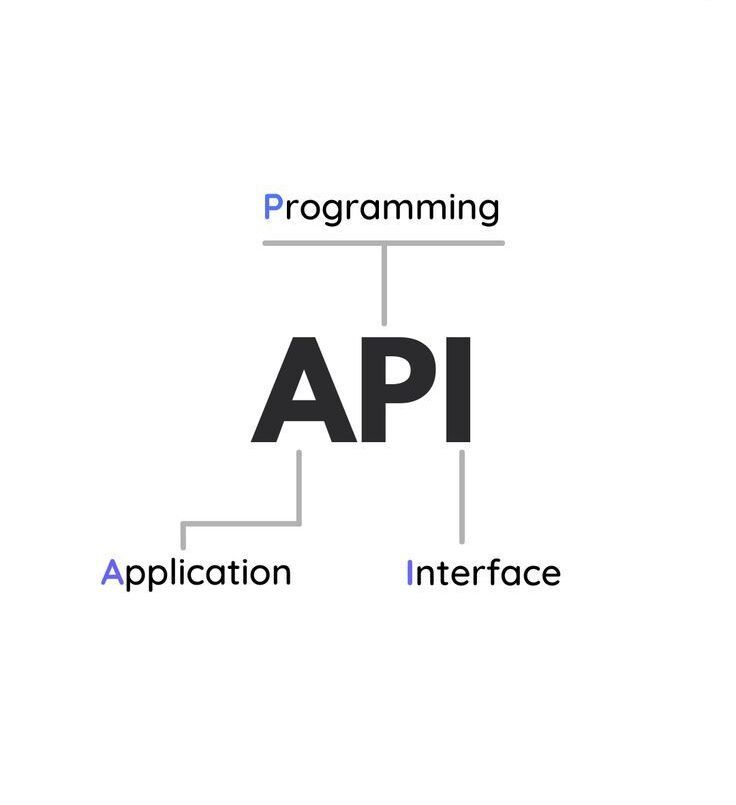
APIs (Application Programming Interfaces) are essential components in modern software development, enabling different applications to communicate and share data seamlessly. In this article, I provide an overview of the most common types of APIs, including REST, GraphQL, SOAP, and gRPC. I discuss the characteristics, advantages, and typical use cases for each type, helping you choose the right API approach for your project.
APIs can be classified by architecture, communication style, or access level. Below are the major API types you'll encounter in software development.
Common API Types
- **REST**: Resource-based API using HTTP methods — Web apps, mobile apps, public APIs
- **GraphQL**: Clients request exactly the data they need — Complex frontends, dashboards
- **gRPC**: High-performance RPC using Protocol Buffers over HTTP/2 — Microservices, internal communication
- **SOAP**: XML-based protocol with strict standards — Banking, healthcare, enterprise systems
- **WebSocket**: Persistent two-way communication — Chat, gaming, live notifications
- **Webhooks**: Event-driven callbacks sent via HTTP — Payment notifications, GitHub events
- **Server-Sent Events (SSE)**: One-way server-to-client streaming — Live dashboards, news feeds
- **RPC (Remote Procedure Call)**: Calls remote functions like local methods — Distributed systems
- **OData**: Standardized REST querying — Enterprise data services
- **JSON-RPC**: RPC protocol using JSON — Lightweight remote procedure calls
- **XML-RPC**: RPC protocol using XML — Legacy integrations
- **MQTT**: Lightweight publish/subscribe messaging — IoT devices
- **AMQP**: Reliable messaging protocol — Financial systems, message queues
- **Apache Kafka API**: Distributed event streaming — Analytics, event-driven systems
- **WebTransport**: Modern low-latency web transport — Streaming, multiplayer games
1. REST API
Uses HTTP methods (GET, POST, PUT, PATCH, DELETE) to manipulate resources.
Example: - GET /users/123 - POST /products - DELETE /orders/45
Best for: - E-commerce - SaaS applications - Mobile backends - Public APIs
Pros: - Easy to learn - Widely supported - Cacheable
Cons: - Can over-fetch or under-fetch data
2. GraphQL
Clients specify exactly which fields they want.
Example:
graphql
query {
  user(id: 1) {
    name
    email
  }
}
Best for: - React/Next.js applications - Mobile apps - Data-heavy dashboards
Pros: - Fetch only required data - Strong typing - Single endpoint
Cons: - More complex server implementation
3. gRPC
High-performance API using Protocol Buffers and HTTP/2.
Example:
protobuf
rpc GetUser(UserRequest) returns (UserResponse);
Best for: - Microservices - Internal APIs - High-throughput systems
Pros: - Extremely fast - Small payloads - Streaming support
Cons: - Less browser-friendly than REST
4. SOAP
XML-based messaging protocol with strict contracts.
Example:
xml
<GetCustomer>
    <CustomerId>123</CustomerId>
</GetCustomer>
Best for: - Banking - Government - Healthcare - Enterprise software
Pros: - High security standards - Formal contracts - Reliable transactions
Cons: - Verbose XML - More difficult to develop
5. WebSocket API
Maintains a persistent, bidirectional connection between client and server.
Best for: - Chat applications - Online games - Live collaboration - Stock tickers
Pros: - Real-time - Low latency
Cons: - Requires connection management
6. Webhook
One application sends an HTTP request to another when an event occurs.
Example events: - Payment completed - Git push - User registered
Best for: - Event notifications - Third-party integrations
Pros: - No polling required - Efficient
Cons: - Receiver must be publicly accessible
7. Server-Sent Events (SSE)
Server continuously pushes updates to the client over a single HTTP connection.
Best for: - News feeds - Monitoring dashboards - Live sports scores
Pros: - Simpler than WebSockets - Native browser support
Cons: - One-way communication only
8. RPC
Allows a client to invoke remote procedures as if they were local functions.
Example: - createUser() - deleteOrder()
Best for: - Internal service communication - Distributed applications
9. OData
REST-based standard that supports filtering, sorting, pagination, and querying.
Example: GET /users?$filter=age gt 18
Best for: - Enterprise data platforms - Business intelligence
10. JSON-RPC
RPC protocol using JSON.
Example:
json
{
  "method": "getUser",
  "params": [123]
}
Best for: - Lightweight APIs - Internal services
11. XML-RPC
Similar to JSON-RPC but uses XML.
Best for: - Legacy systems - Older enterprise integrations
12. MQTT
Lightweight publish/subscribe messaging protocol.
Best for: - IoT - Smart homes - Embedded devices - Sensors
Pros: - Very low bandwidth - Low power consumption
13. AMQP
Reliable messaging protocol often used with message brokers.
Best for: - Banking - Order processing - Enterprise messaging
Common brokers: - RabbitMQ - Apache Qpid
14. Apache Kafka API
Distributed event-streaming platform for handling large volumes of events.
Best for: - Event-driven architectures - Analytics pipelines - Log aggregation - Real-time processing
15. WebTransport
Modern web API built on HTTP/3 that supports low-latency, bidirectional communication with multiple streams.
Best for: - Multiplayer games - Video and audio streaming - Interactive applications
APIs by Access Level
Not all APIs are public. They can also be categorized by who is allowed to use them:
- **Public (Open) API**: Available to external developers — Social media APIs, weather APIs
- **Private API**: Used only within an organization — Internal HR or inventory APIs
- **Partner API**: Shared with approved business partners — Payment provider integrations
- **Composite API**: Combines multiple API calls into a single request — Fetching user profile, orders, and notifications in one call
Which API Type Should You Use?
- Standard web application: REST
- Complex frontend with flexible data needs: GraphQL
- Internal microservices: gRPC
- Banking or enterprise integrations: SOAP
- Real-time chat or gaming: WebSocket
- Third-party event notifications: Webhooks
- Live dashboards with server-only updates: SSE
- IoT devices: MQTT
- Message queues between services: AMQP
- Event-driven architecture: Apache Kafka
- Enterprise data querying: OData
For most modern applications, you'll commonly see a combination such as REST for public APIs, gRPC for internal microservices, WebSockets for real-time features, Webhooks for external event notifications, and Kafka or RabbitMQ (using AMQP) for asynchronous communication between backend services.